Ekanga Abhyanga is a non-invasive and relaxing procedure performed by a trained therapist under the guidance of an Ayurvedic physician. The focus is entirely on the targeted area.
Preparation: The patient is positioned comfortably to ensure easy access to the affected body part. The therapist selects a specific medicated oil (e.g., Mahanarayana Taila for joints, Sahacharadi Taila for lower body) based on the condition and Dosha imbalance. The oil is warmed to a comfortable temperature.
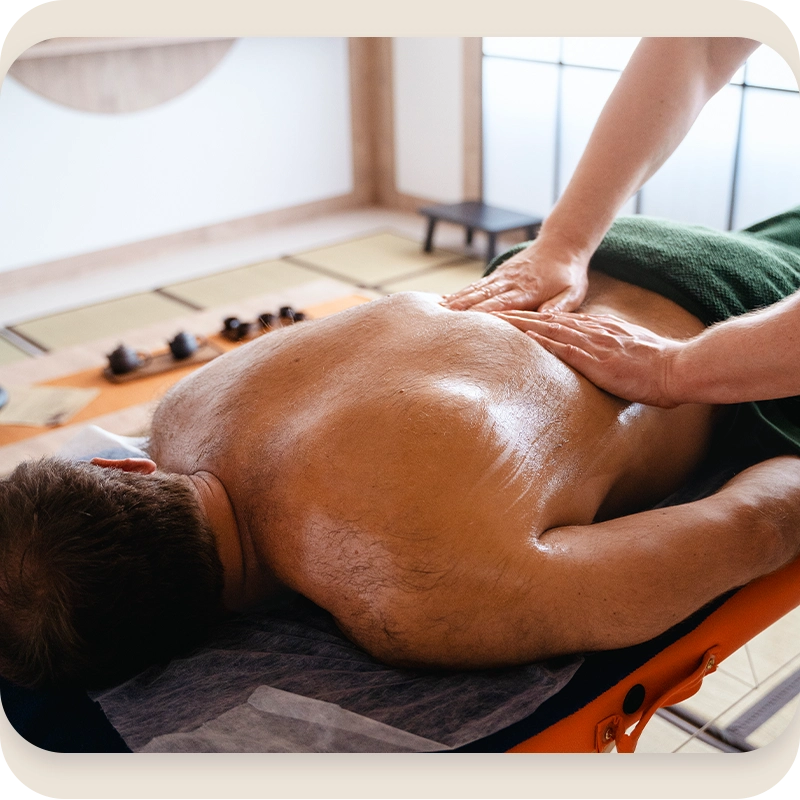
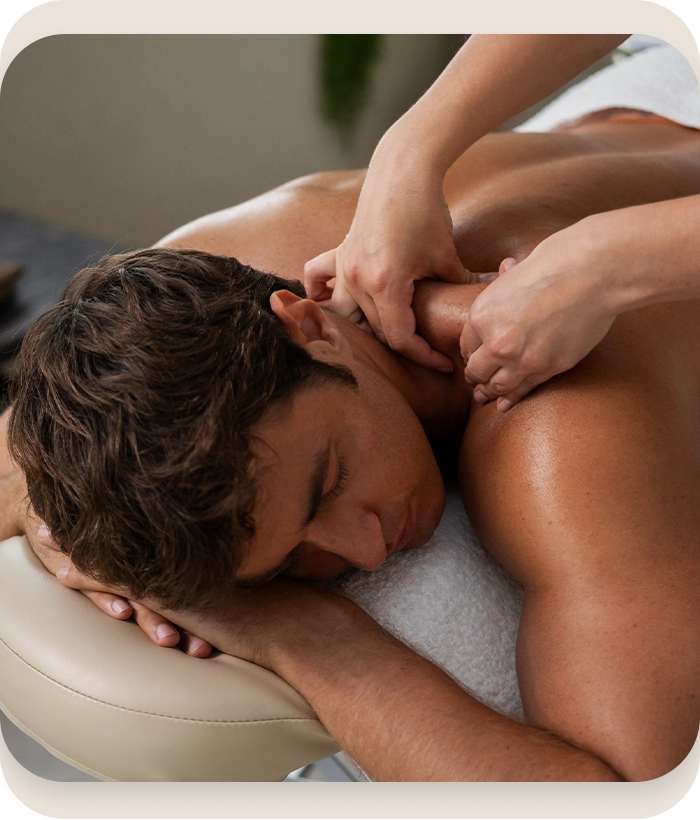
Massage (Main Procedure): The therapist applies the warm oil liberally to the affected area. The massage technique is highly focused and usually involves deep, firm strokes, circular movements over joints, and gentle kneading of stiff muscles. The strokes are tailored to the anatomical structure of the area (e.g., following the muscle fibers or the curvature of the spine). The duration of the massage is typically longer than a general massage on the same area (usually 20–40 minutes) to allow the medicinal properties to deeply penetrate the localized tissues.
Optional Swedana (Local Fomentation): After the oil massage, the physician often recommends localized Swedana (fomentation) to enhance the therapeutic effect. This may involve applying heat using:
- Nadi Sweda: Localized steam applied through a tube.
- Patra Pinda Sweda: Application of warm boluses of medicated leaves.
- Upanaha Sweda: Application of a warm herbal poultice or plaster.
Post-Therapy Care: The remaining oil is gently wiped off, or the patient may be advised to take a warm shower using an herbal cleanser, depending on the area treated.The patient is advised to keep the treated area warm and avoid cold exposure or strenuous activity for the rest of the day.